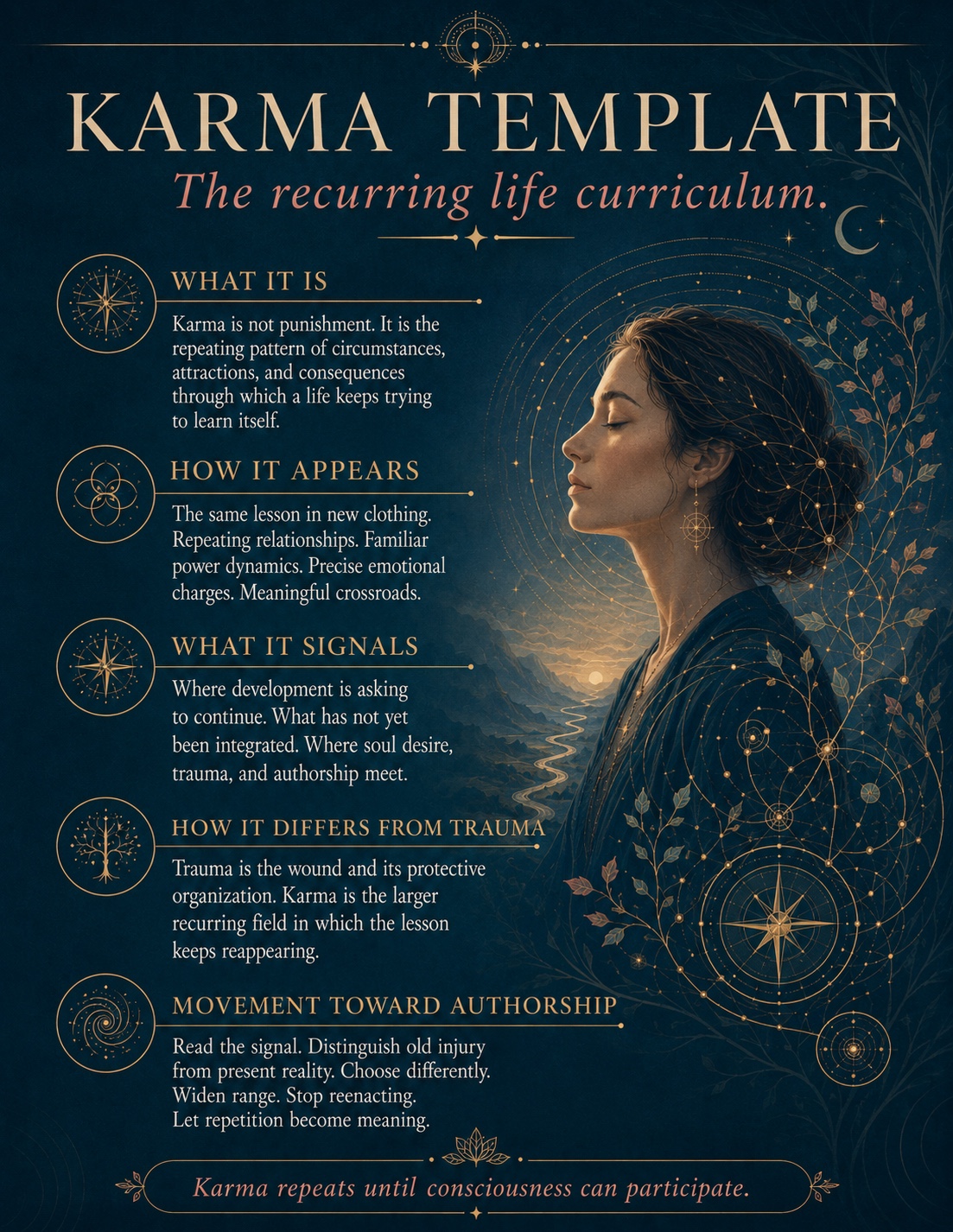
What Is Completion Systems Theory?
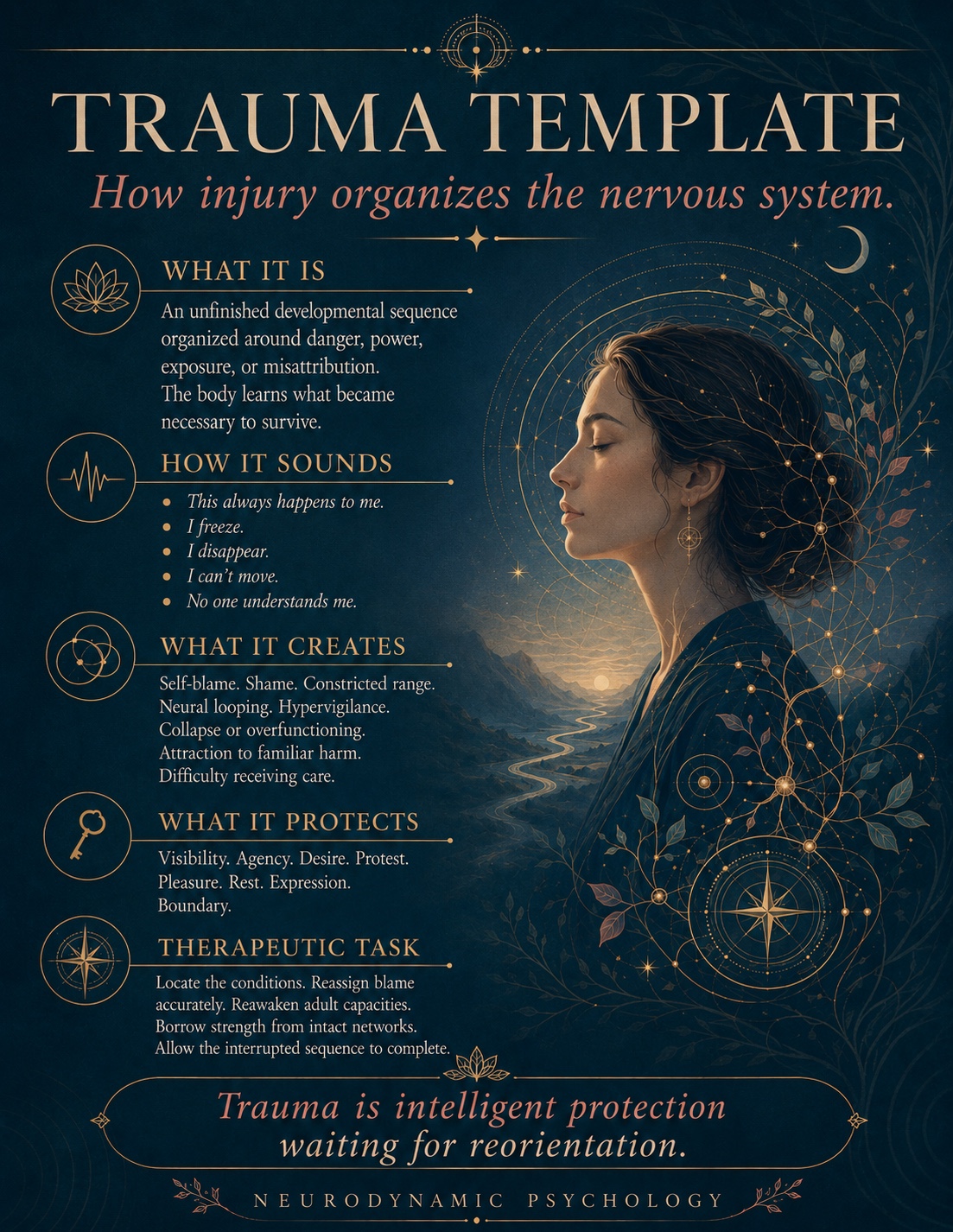
CST understands trauma not primarily as content to be processed, but as incomplete neural sequences awaiting resolution.
Earlier in my clinical career, as I began working more directly with trauma, the framework that best helped me organize what I was seeing in the room was psychosynthesis—particularly Roberto Assagioli's model of subpersonalities.
Clients presented with trauma-organized inner structures: younger selves frozen in time, adaptive identities formed under pressure, parts of the psyche carrying specific beliefs, rules, and survival strategies. These subpersonalities were not random. They were coherent, purposeful, and shaped by experience. Clinically, the task was integration. We named the part, differentiated it from the adult self, made contact with it, understood its function, and helped it rejoin the whole. For many people, this work brought real relief.
At the time, this made sense. Trauma appeared compartmentalized—one or several dominant injuries that could be identified, metabolized, and integrated. Psychosynthesis gave language and structure to that process, and in cases of discrete trauma, it worked.
From Parts to Loops
But as my work deepened—particularly with clients carrying complex developmental trauma—another pattern became impossible to ignore.
With CPTSD, the issue was not a single arrested part, or even a small constellation of subpersonalities. What appeared instead were repeating sequences: self-reinforcing loops organized around threat, shame, abandonment, or danger. These patterns did not behave like symbolic material waiting to be integrated. They behaved like closed biological circuits.
Clients could understand their history. They could name their parts. They could feel compassion for them. And still, the same internal sequences would reactivate—predictably and relentlessly—under specific conditions. The nervous system was not failing to integrate. It was holding unfinished business.
What became clear over time was this: integration is not what resolves these loops.
These patterns persist not because the psyche has rejected a part, but because a sequence has been interrupted. The system remains organized around defense because it has never been allowed to complete the original protective response. In that state, the nervous system cannot stand down.
This observation changed my work.
Completion, Not Integration
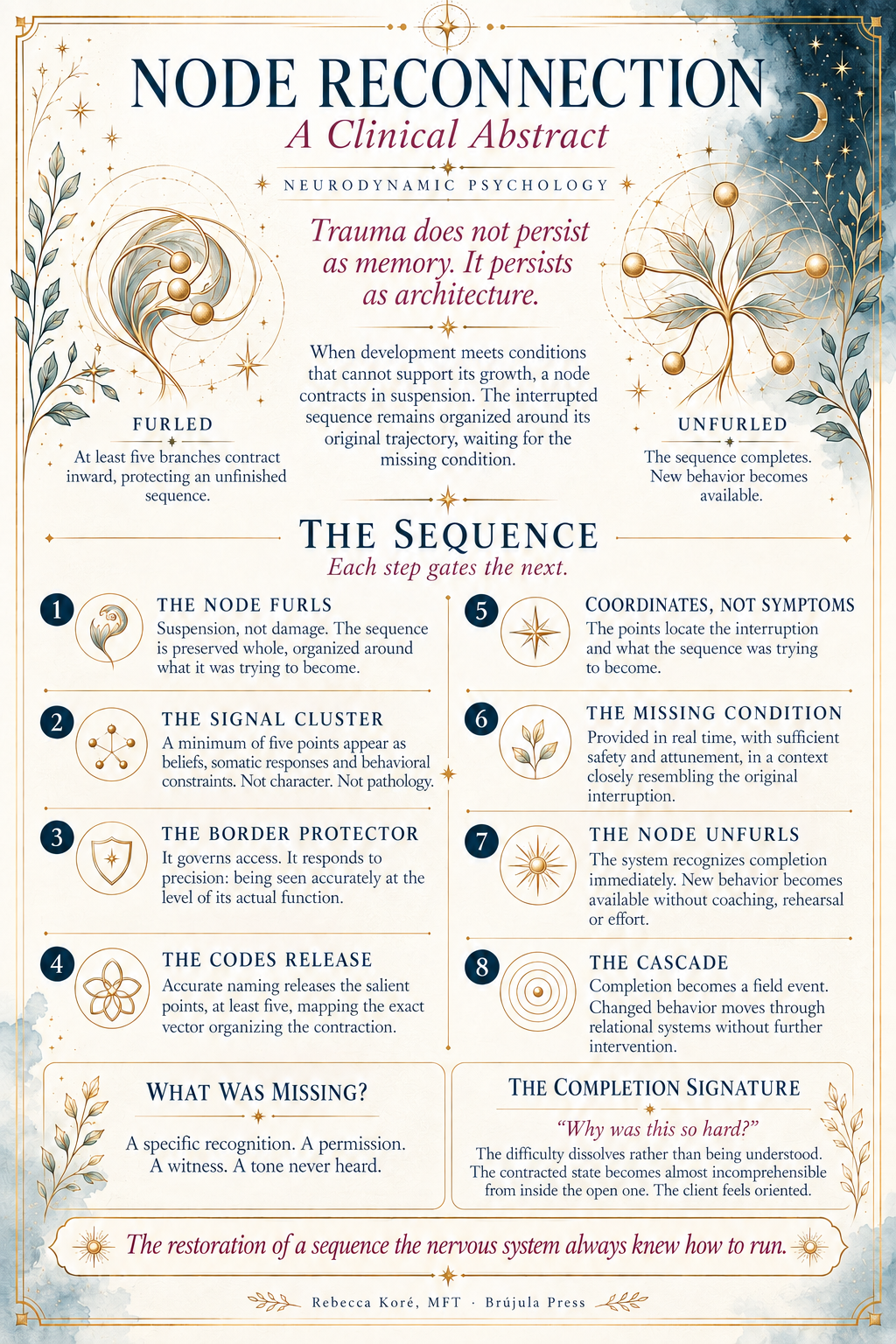
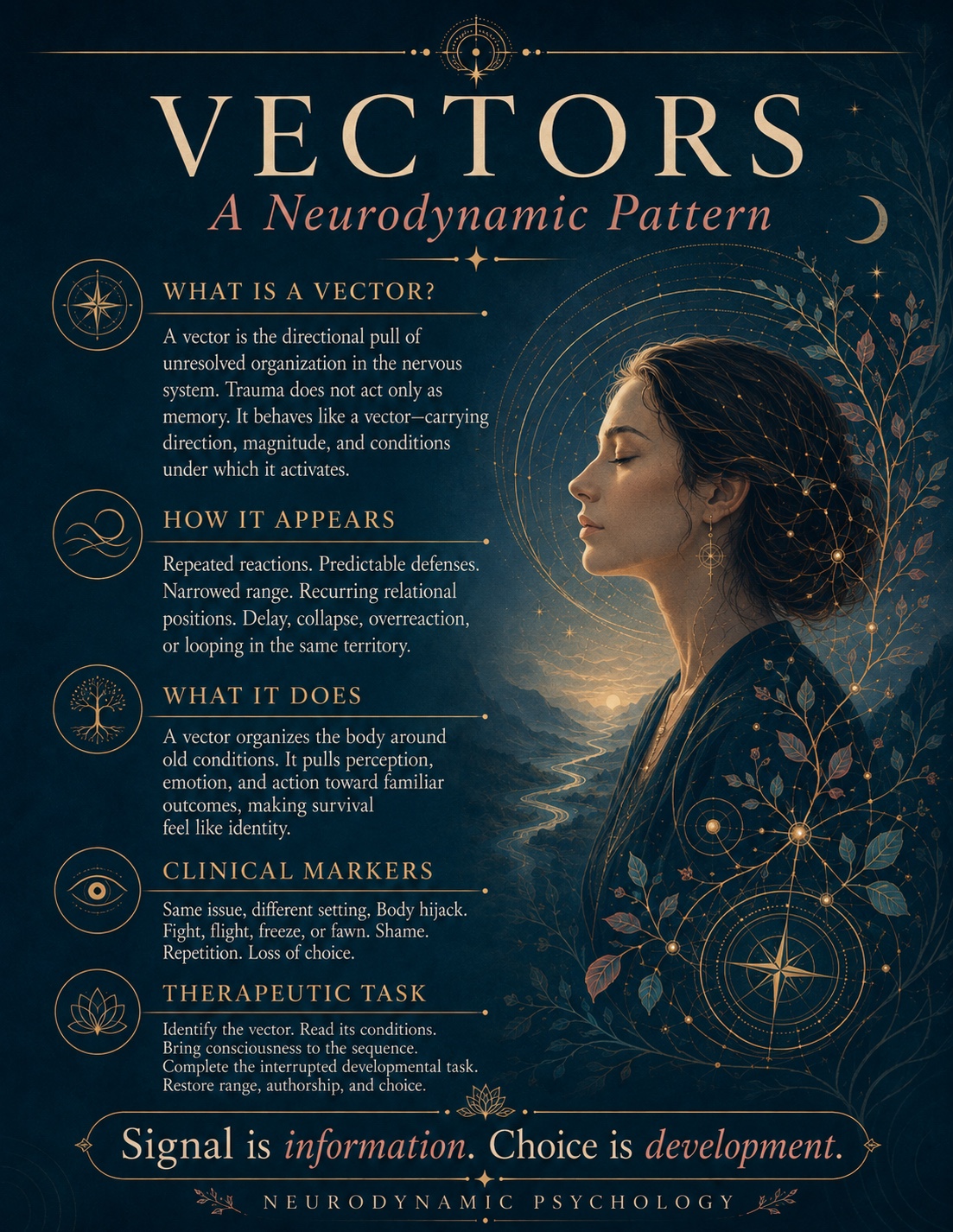
What I began to track—across thousands of clinical hours—was that these loops follow consistent structures. Most often, they organize around a limited number of nodes, typically four or five, through which the system cycles repeatedly. Belief shapes perception. Perception triggers affect. Affect drives behavior. Behavior confirms belief. The loop sustains itself not psychologically, but neurobiologically.
When the right connection is made—under conditions of safety, attunement, and precision—the system does not need to be integrated. It completes.
Completion does not produce insight. It produces release. The nervous system finishes an interrupted sequence, and the loop dissolves without rehearsal, management, or effort. Defensive organization loosens because it is no longer required.
This observation became the foundation of what I now call Completion Systems Theory (CST).
CST understands trauma not primarily as content to be processed, but as incomplete neural sequences awaiting resolution. Psychological content—memories, beliefs, language—functions not as the target of change, but as a set of verbal keys that lead back to the interrupted sequence.
Border Protectors
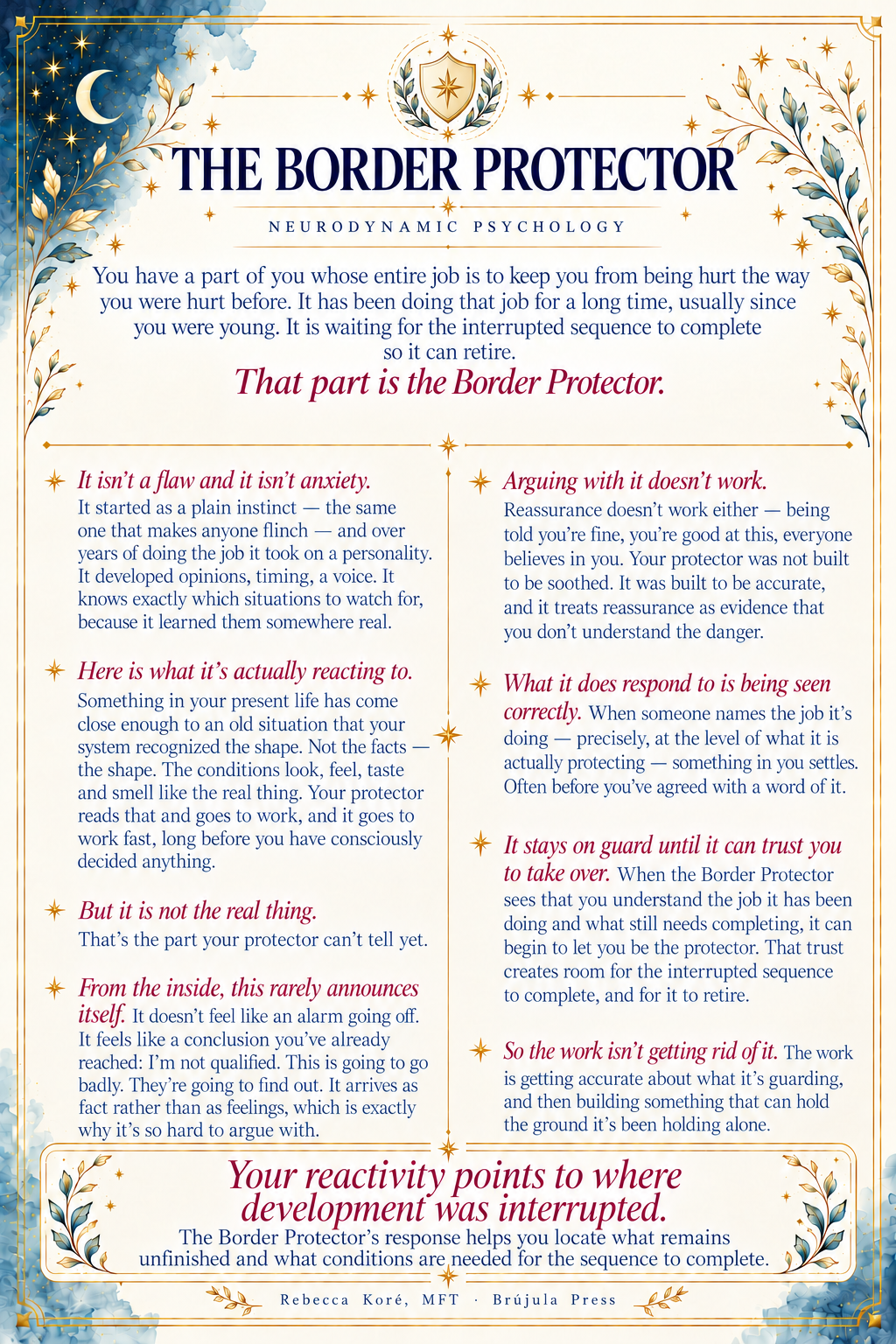
In this process, what I refer to as Border Protectors often emerge. These are not symbolic parts to be integrated, but tightly organized neural gatekeepers whose role is to prevent premature or unsafe access to unfinished sequences. They appear once trust has been tested and established, and they respond not to reassurance, but to precision. When the clinician can accurately see and name the structure the system is protecting, these Border Protectors begin to release information—often in the form of exact phrases, triggers, or sensory cues—that point directly to the missing step in the sequence.
What This Looks Like in the Room
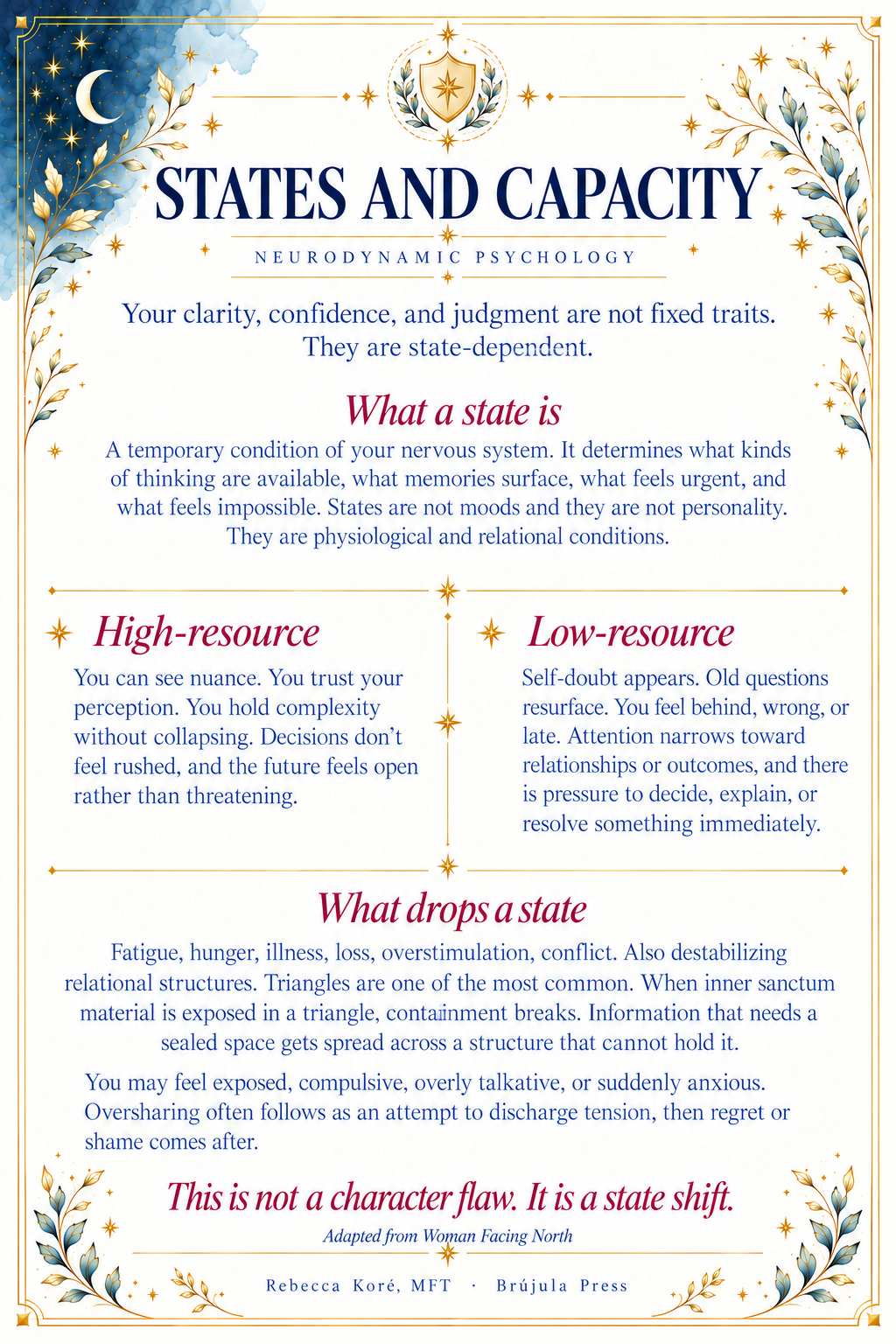
For example, someone may know exactly why it's hard for them to set a boundary. They may understand their history, recognize the pattern, and even feel compassion for themselves. And still, when the moment comes, they lose jurisdiction. Sometimes the body floods—tight, reactive, unable to move or speak. Sometimes nothing happens at all. The system collapses, and the response that should be there is simply not available.
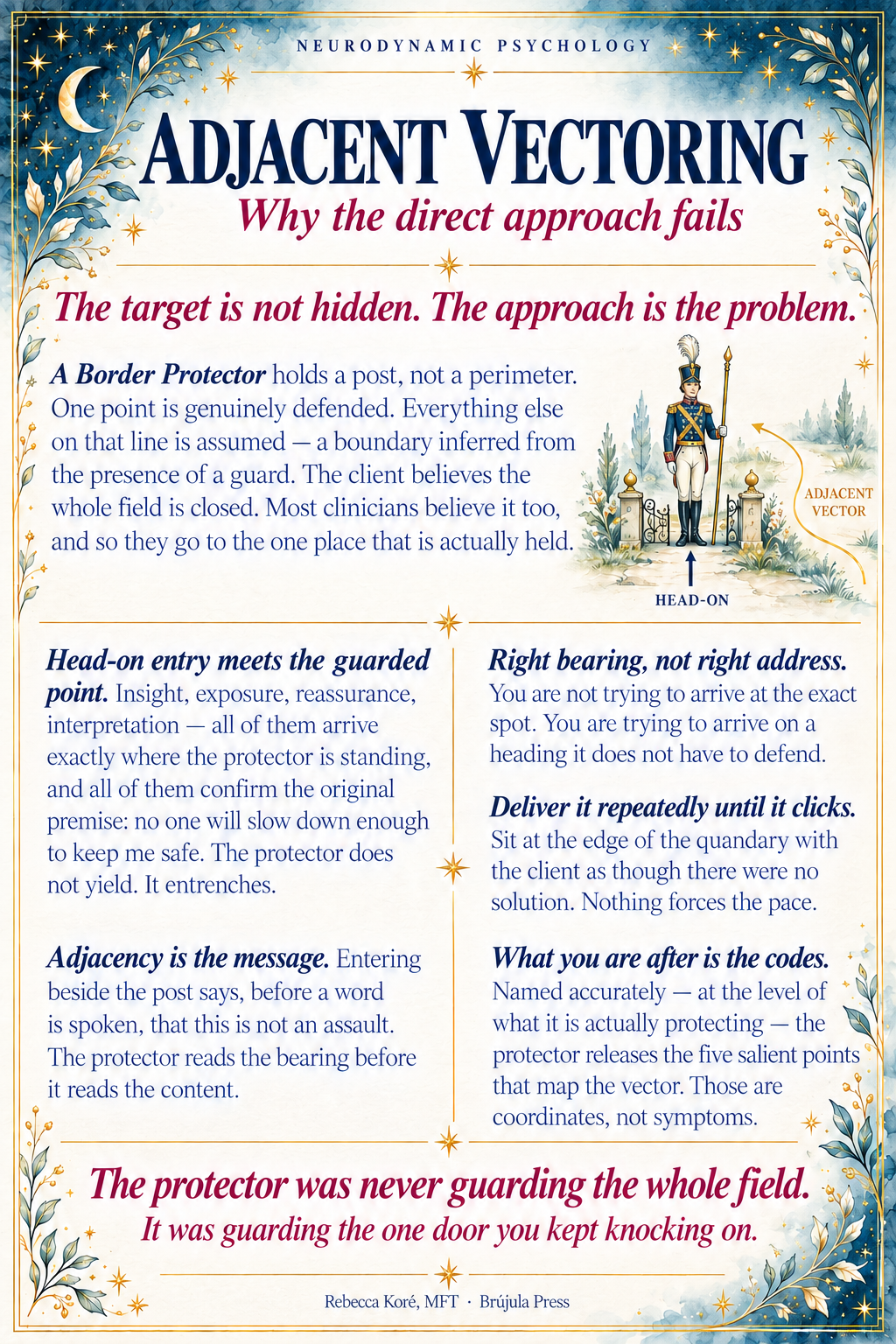
In CST, the first task is to locate that loss of jurisdiction: the specific condition under which a person can no longer act on their own behalf. Strengthening the adult self still matters, and building its capacity to observe and regulate is often part of the work. But understanding alone does not restore access. So the work moves adjacently—what I call Adjacent Vectoring. The person learns to recognize the conditions in which they collapse, and begins to prepare for them—setting props, arranging support in advance, approaching the charged moment in small, deliberate steps rather than meeting it unguarded. Slow exposure allows the system to encounter the condition without being overtaken by it.
Within that approach, the clinician stays with the reaction or collapse as it appears and notices what didn’t happen the first time. Often, what was missing was not insight or support, but a specific response from another person: words never spoken, orientation never provided, a task never assigned, a recognition that never arrived, a sacrifice not witnessed.
When those missing elements are provided now, in real time, within a trusting relationship and under conditions that closely resemble where the sequence was originally interrupted, the nervous system recognizes them immediately. Something clicks. The body responds differently. The reaction that once took over, or the collapse that once left the person absent, no longer needs to loop without resolution.
Nothing is reframed, and the completion itself is not coached. The change occurs because the system finally receives what it was waiting for—and can move on.
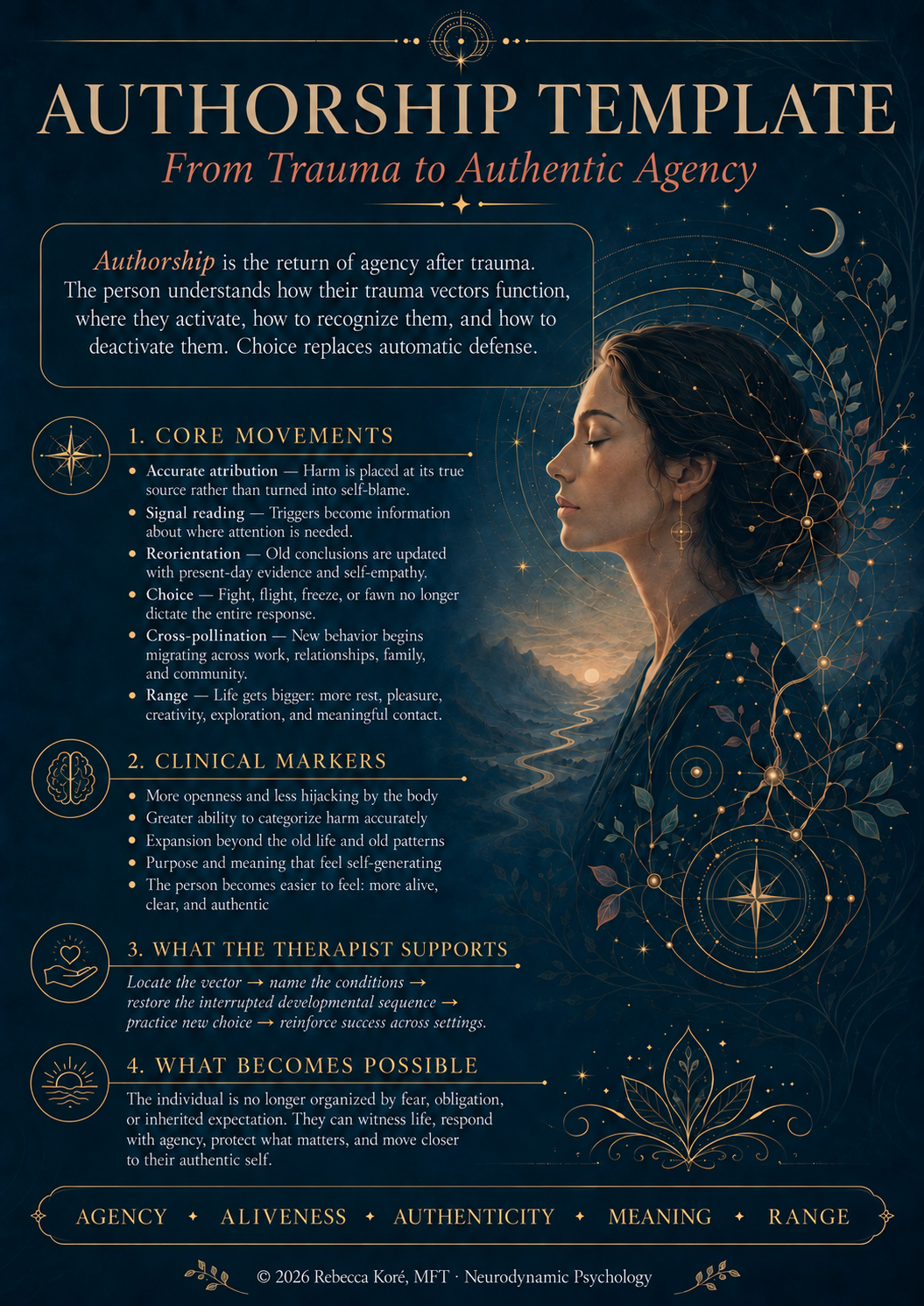
The therapist's task, then, is not to change the client's belief system or to integrate parts indefinitely, but to identify where the client's original developmental structure was hijacked by the reversals, shocks, or dissociations that trauma imposes on neurobiology. The work is to identify loops, locate the blocked or missing node, and support completion. When completion occurs, defensive reactivity falls away. The system regains range.
What follows is not automatic harmony, but possibility.
Integration, in this model, is not the cause of change—it is the consequence of restored sequence. New responses become available where none existed before. New choices emerge not because they are taught, but because the nervous system is no longer constrained by defense. The work that follows completion is adaptive, not reparative: learning how to live from a system no longer organized around threat.
Where Earlier Models Still Fit
Importantly, CST does not reject earlier models. Psychosynthesis and parts-based approaches remain essential for establishing a functional adult self capable of observation and regulation. But with complex trauma, they are preparatory, not sufficient. CPTSD demands a framework that addresses recurrence and physiology, not meaning alone.
I am not describing a departure from my earlier work so much as a clarification of what it was always pointing toward. I have been doing this work all along—listening, observing, tracking what actually changes people over time. CST emerged not from theory, but from necessity: from watching what stalled, what repeated, and what finally resolved patterns that had persisted for decades.
This is not a technique. It is a way of understanding how trauma organizes the nervous system—and how, under the right conditions, that organization can finally complete.
Explore the field guides below, and subscribe to Why Was This So Hard for more writing from clinical work.